Metropolitan Stock Exchange of India
Fundamentals
| Metropolitan Stock Exchange (MSEI) Unlisted Shares Price | Rs 5.95 Per Equity Share | Market Cap (in cr.) | Rs 6545 |
| Lot Size | 10000 Shares | P/E Ratio | N/A |
| 52 Week High | Rs 9 | P/B Ratio | 16.53 |
| 52 Week Low | Rs 2.7507 | Debt to Equit | 0 |
| Depository | NSDL & CDSL | ROE (%) | -8.58 |
| PAN Number | AAFCM6942F | Book Value | 0.36 |
| ISIN Number | INE312K01010 | Face Value | 1 |
| CIN | U65999MH2008PLC185856 | Total Shares | 11000217033 |
| RTA | KFin Technology |
Shareholding Pattern
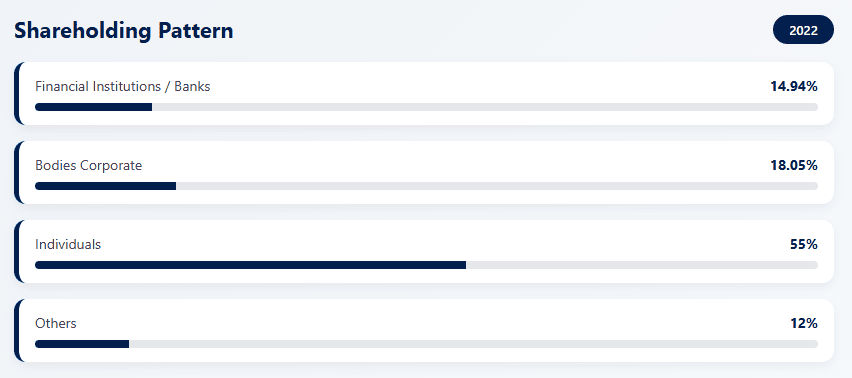
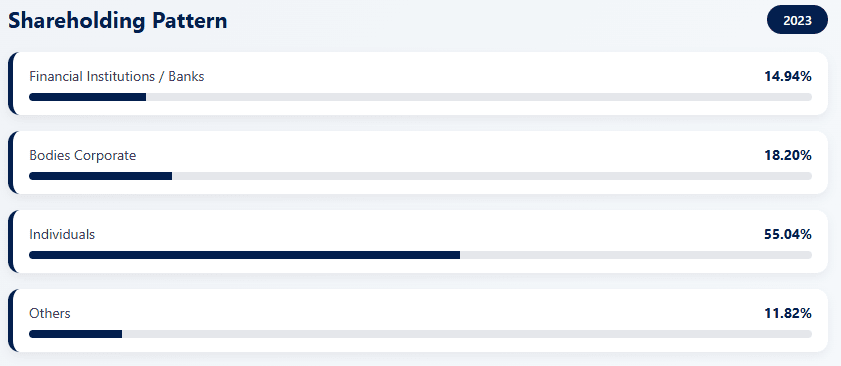
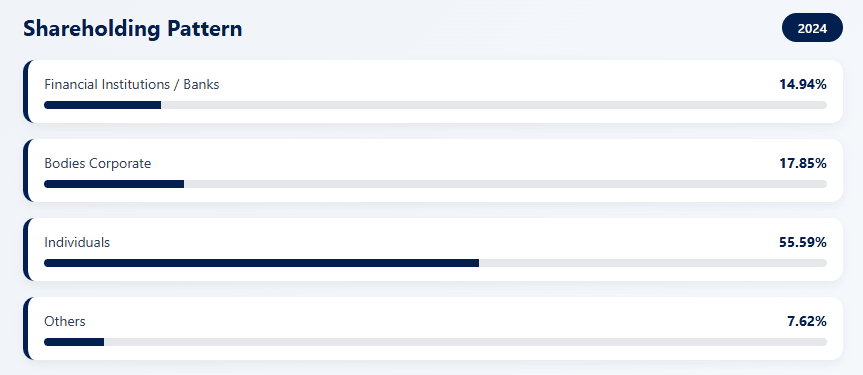
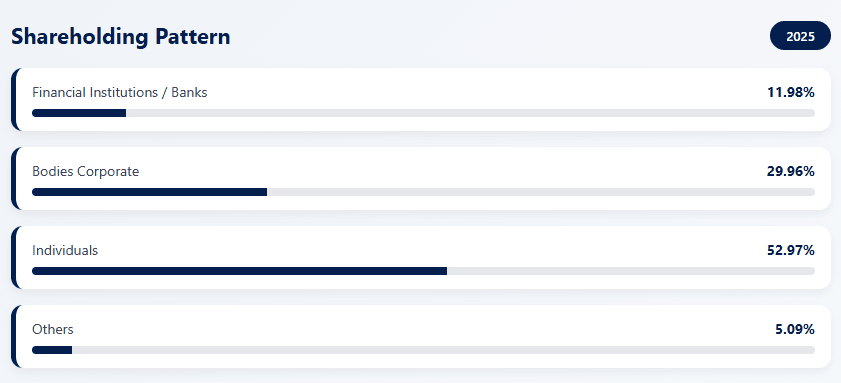
Metropolitan Stock Exchange of India

Founded in 2008 as MCX-SX and rebranded in 2014, MSEI is India's third national-level stock exchange. Headquartered in Mumbai and regulated by SEBI, it provides a transparent electronic platform for trading equities, currency derivatives, debt, and interest rate futures. Its benchmark index, the SX40, tracks market performance, while the Metropolitan Clearing Corporation (MCCIL) manages risk and settlement.
Backed by major institutions like SBI and HDFC Bank, the exchange is currently led by CEO Latika S. Kundu. Despite its institutional credibility, MSEI is undergoing financial restructuring, reporting a net loss of Rs 34 crore for FY 2024-25. As an unlisted entity, it remains a key player in fostering competition and innovation against the NSE and BSE dominance.
Company Business Model
The Metropolitan Stock Exchange of India operates as a market infrastructure institution, providing regulated platforms for trading, clearing, and settlement in select financial market segments.
Trading Platform Operations
MSEI offers electronic trading primarily in currency derivatives, debt instruments, and permitted capital market products. Revenue is earned through transaction and trading fees.
Clearing & Settlement Services
Through its clearing and settlement framework, MSEI manages margining, risk management, and trade settlement, earning clearing and settlement charges.
Market Data & Index Services
MSEI monetizes market data dissemination, including real-time and historical trading data, sold to brokers and institutional participants.
Technology & Connectivity Services
Provides trading access, connectivity, and exchange technology services to members, creating recurring fee-based revenues.
Competitors
MSEI operates in India's exchange and market infrastructure space and competes with the following players:
BSE Limited
India's oldest stock exchange, competing with NSE in equity trading, derivatives, listings, and market data services.
National Stock Exchange of India
The dominant competitor across equities, equity derivatives, currency derivatives, debt, and market data, with significantly higher volumes and liquidity.
National Commodity & Derivatives Exchange
Indirect competitor through derivatives trading, primarily in agricultural commodities.
Multi Commodity Exchange of India
Competes indirectly in the derivatives ecosystem, especially for non-agricultural commoditie