Skip to searchSkip to main content

Apollo Green Energy Limited

Company Overview
Balance Sheet Analysis
Cash Flow Statement Analysis
Profit & Loss Statement Analysis
Financial Insights
Premium Insights
Company Overview
Balance Sheet Analysis
Cash Flow Statement Analysis
Profit & Loss Statement Analysis
Financial Insights
  • Revenue Stagnation: Revenue has flattened with a CAGR of -0.1%, signaling potential project delays or market saturation in the renewables sector.
  • Cash Flow Strain: Cumulative CFO is negative (-22% of Net Profit), likely due to high upfront working capital requirements typical in infrastructure projects.
  • Scale: A smaller player in this dataset with 806 Cr revenue; needs to secure new order books to restart growth
Premium Insights

Fundamentals

Apollo Green Energy Limited Unlisted Shares Price₹ 84 Per Equity ShareMarket Cap (in cr.)₹ 314
Lot Size
  500 SharesP/E Ratio10.04
52 Week High₹ 335P/B Ratio0.51
52 Week Low ₹ 78Debt to Equit 0.74
DepositoryNSDL & CDSLROE (%) 5.11
PAN Number AAACA6447NBook Value166.22
ISIN NumberINE838A01015Face Value10
CIN U74899DL1994PLC061080Total Shares 40610287
RTAAlankit Assignments

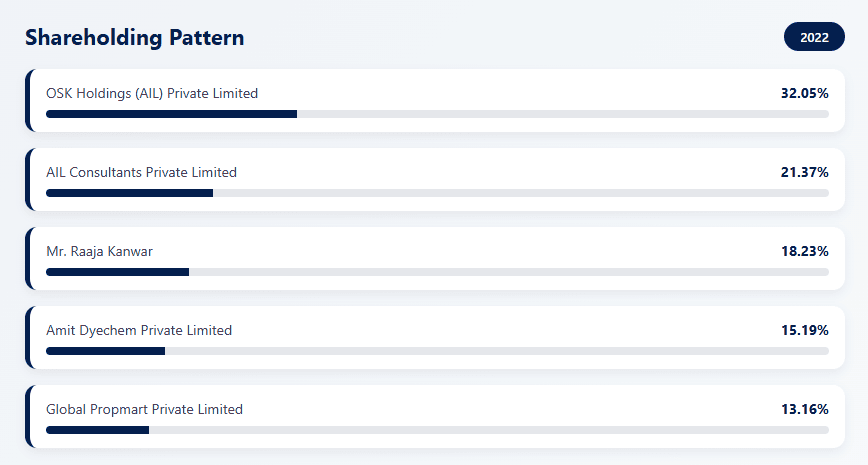
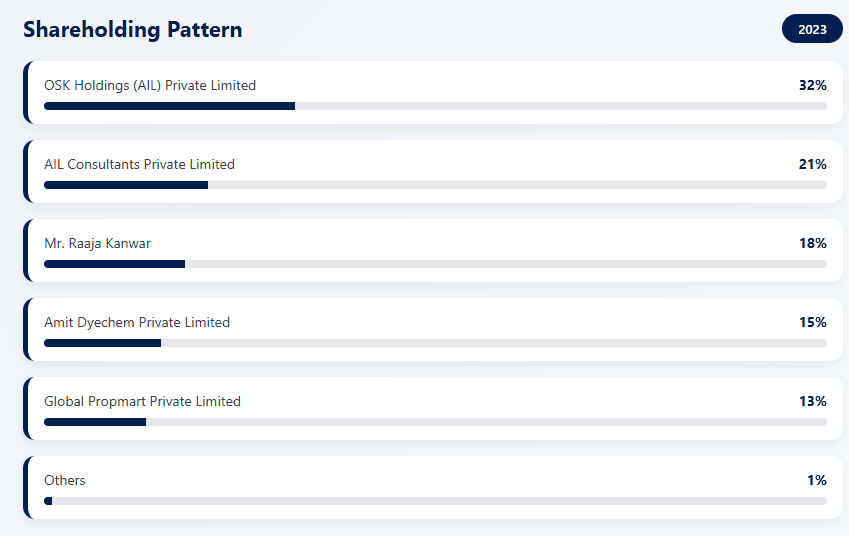
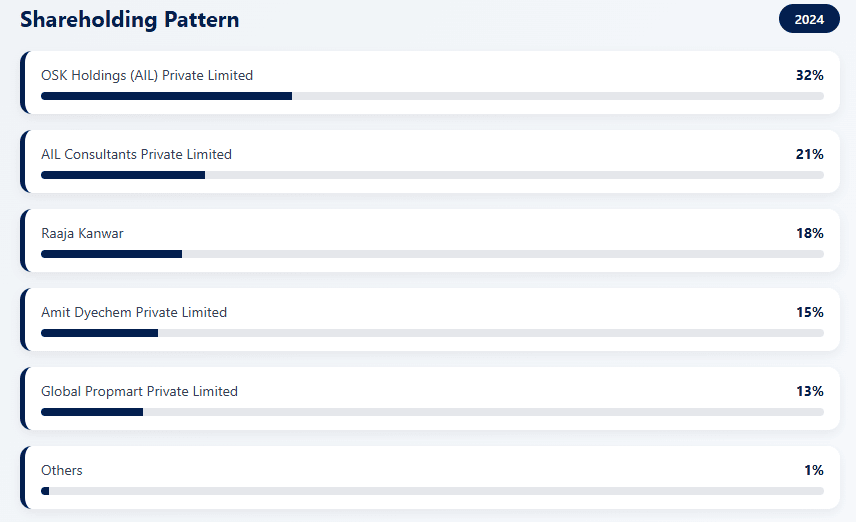
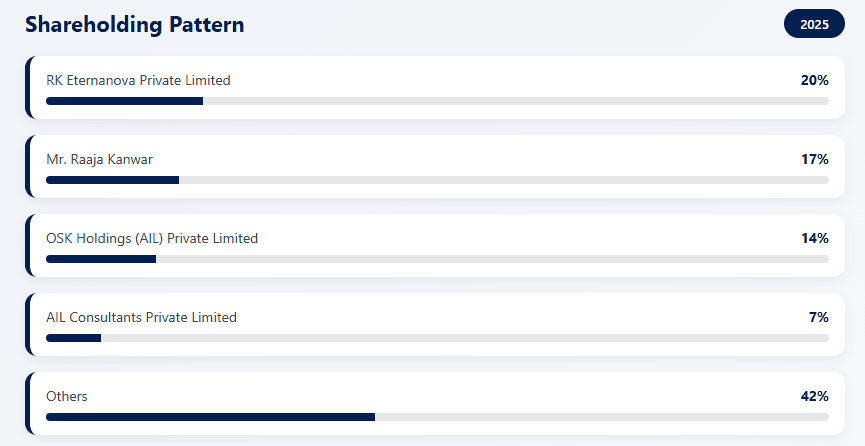
Shareholding Pattern

2022
2023
2024
2025
2022
2023
2024
2025

Apollo Green Energy Limited

Apollo Green Energy Limited (AGEL), a subsidiary of the Apollo International Group, is a prominent Indian EPC firm specializing in utility-scale solar, wind, and hybrid energy solutions. Currently managing an order book of approximately ₹3,500 crore, the company aims to scale its portfolio to ₹10,000 crore by 2026 while expanding into green hydrogen and battery storage. AGEL is also vertically integrating its operations through a 500 MW solar module manufacturing plant in Madhya Pradesh and a major ₹4,500 crore solar investment in Odisha. With a reported net profit of ₹44.36 crore in FY25, the firm is strategically preparing for an IPO in 2026 to transition from a construction-focused provider to a large-scale independent power producer.

Company Business Model

Apollo Green Energy Limited operates a renewable energy EPC (Engineering, Procurement & Construction) business model, focused primarily on utility-scale solar power projects.

EPC Services

Designs, engineers, procures, and constructs large solar power plants for government bodies, PSUs, and private developers.

Turnkey Solutions

Delivers end-to-end execution including land development, civil works, module installation, and grid connectivity.

Asset-Light Model

Does not own power assets; focuses on execution capability, reducing balance-sheet risk.

Project Execution Revenue

Earns contract-based revenues through fixed-price or milestone-linked EPC contracts.

Competitors

Tata Power Solar

 Strong PSU-backed EPC with execution scale.

Larsen & Toubro (L&T)

 Infrastructure major with renewable EPC vertical.

Waaree Energies EPC

 Strong domestic solar EPC and manufacturing linkage.

Azure Power

Utility-scale solar developer with EPC capabilities.

SWOT Analysis

Strengths

  • Pure-Play Renewable EPC Focus : Specialized expertise in utility-scale solar EPC projects, enabling efficient execution.
  • Asset-Light Business Model : No ownership of power assets; avoids long-term debt and power price risk.

  • Government & PSU Exposure : Strong participation in central and state renewable tenders, ensuring steady project pipeline.

  • Execution Track Record : Demonstrated capability in engineering, procurement, and timely project delivery.

  • Sector Tailwinds : Direct beneficiary of India’s aggressive renewable energy capacity expansion goals.

Weaknesses

  • Low Margin EPC Nature : EPC contracts are competitive, leading to thin operating margins.

  • Working Capital Intensive : Large projects require significant upfront capital and expose the company to payment delays.

  • Order Book Dependence : Revenue visibility tied to continuous tender wins.

  • Limited Diversification : High dependence on solar EPC, with limited exposure to wind, storage, or O&M.

Opportunities

  • Massive Renewable Build-Out in India : Government targets create multi-year demand for EPC players.
  • Expansion into Adjacent Segments : Entry into energy storage, hybrid projects, or O&M services can improve margins.

  • Private Sector Capex Revival : Rising corporate renewable adoption opens higher-quality client opportunities.

  • Scale Benefits : Larger order book can improve procurement efficiency and operating leverage.

Threats

  • Intense Competition : Faces pressure from large EPC players like Tata Power Solar, L&T, and Sterling & Wilson.
  • Input Cost Volatility : Fluctuations in module prices, logistics, and duties can erode margins.

  • Policy & Regulatory Risk : Changes in import duties, tender terms, or execution timelines affect profitability.

  • Project Execution Risk : Delays due to land, grid connectivity, or approvals can impact cash flows.

Annual Report